
TECHNOLOGY
The financial markets are a battleground of innovation, where AI Trading and Manual Trading represent two distinct approaches to wealth creation. Manual trading involves traders manually analyzing market data, making decisions, and executing trades, relying on skill and intuition. In contrast, AI trading leverages artificial intelligence, using algorithms and machine learning to automate trading with unmatched speed and precision. The rise of AI trading platforms and trading bots has captivated traders, from beginners exploring automated trading to seasoned investors seeking efficiency. Yet, can algorithmic trading truly outshine the adaptability of human traders? This article offers a comprehensive, unbiased comparison of AI trading vs manual trading, dissecting their strengths, weaknesses, and key differences. Aimed at traders, investors, and tech enthusiasts aged 25–55, this guide provides actionable insights to align your trading strategy with your goals, risk tolerance, and resources. By exploring use cases, risks, and future trends, we aim to empower you to navigate the evolving landscape of finance with confidence, whether you’re drawn to the precision of futures automated trading systems or the control of manual strategies.
What is Manual Trading?
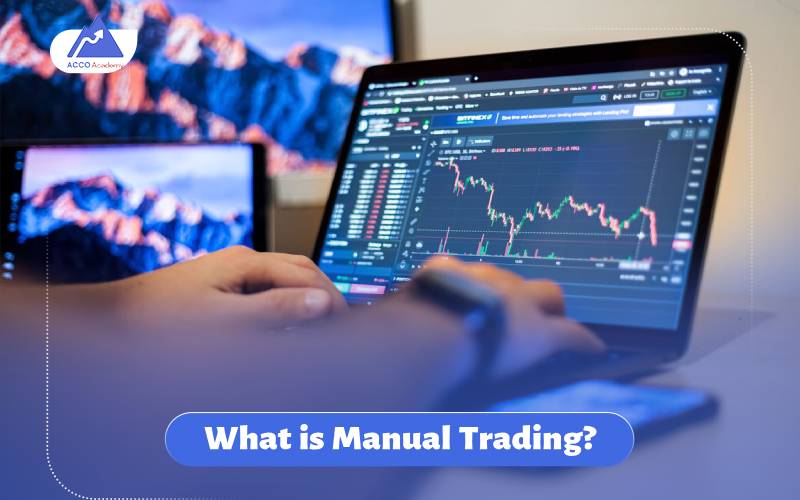
Manual trading is the traditional approach where traders independently analyze markets, make decisions, and execute trades without automation. It relies on human expertise to interpret technical indicators (e.g., MACD, Fibonacci retracement) or fundamental factors (e.g., corporate earnings, interest rates). Common in stocks, forex, and cryptocurrencies, manual trading emphasizes skill and intuition.
The Manual Trading Process
- Market Analysis: Traders study price charts, economic reports (e.g., U.S. non-farm payrolls), and news to forecast trends.
- Decision-Making: Decisions integrate analysis, risk management (e.g., position sizing), and market sentiment.
- Trade Execution: Orders are placed manually via platforms like Thinkorswim or eToro.
Manual trading demands a nuanced understanding of market dynamics. For instance, a forex trader might analyze the EUR/USD pair, combining technical indicators like RSI with news about ECB policy changes. This process builds expertise but is labor-intensive, requiring hours of chart analysis and real-time monitoring. During the 2021 Suez Canal blockage, manual traders who quickly interpreted its impact on oil prices could capitalize on volatility, showcasing human adaptability. However, the time commitment can overwhelm part-time traders, especially in fast-moving markets like cryptocurrencies, where Bitcoin’s price can swing 10% in hours. Manual trading also fosters discipline, as traders learn to set stop-loss orders to mitigate risks, but it requires constant vigilance to avoid missing opportunities or reacting impulsively to market noise.
Pros of Manual Trading
Manual trading offers unique advantages for those who value control and flexibility:
- Control: Traders dictate every aspect, from strategy design to trade execution, tailoring approaches to personal goals.
- Flexibility: Humans can adapt to sudden events, like a Federal Reserve rate hike or a corporate scandal, which AI may not anticipate.
- Learning Opportunities: Analyzing markets deepens understanding of technical patterns and economic drivers, enhancing long-term skills.
- Human Discretion: Traders can incorporate qualitative factors, such as market sentiment or political developments, often missed by algorithms.
For example, during the 2020 COVID-19 market crash, manual traders who recognized early recovery signals in tech stocks like Zoom or Amazon adjusted strategies swiftly, outperforming rigid systems. This flexibility allows traders to pivot during black-swan events, such as Brexit, where human intuition about voter sentiment informed profitable trades. Manual trading also cultivates analytical skills; a swing trader might master candlestick patterns like doji or hammer, improving precision over time. Additionally, human discretion enables nuanced decisions, such as avoiding trades during uncertain earnings seasons or capitalizing on hype-driven rallies, like the 2021 GameStop surge. However, these benefits require dedication. A trader spending hours analyzing Nasdaq trends might develop a keen sense of market timing but sacrifice time for other pursuits, highlighting the trade-off between control and effort in manual trading strategies.
Cons of Manual Trading
Despite its strengths, manual trading has significant drawbacks:
- Time-Consuming: Market analysis and trade execution demand hours of focus, limiting scalability.
- Emotional Biases: Fear, greed, or overconfidence can lead to poor decisions, like holding losing positions too long.
- Inconsistency: Performance fluctuates with mood, fatigue, or external distractions.
- Limited Scalability: Human constraints restrict trading across multiple markets or assets.
For instance, a day trader monitoring the S&P 500 might miss opportunities in the forex market due to time constraints, unlike futures automated trading systems that handle multiple assets. Emotional biases are a major hurdle; during the 2021 Dogecoin rally, many manual traders bought at peak prices driven by FOMO, only to face losses when the hype faded. Inconsistency is another challenge—a trader distracted by personal issues might miss critical signals, such as a breakout in gold prices. Scalability is limited; even skilled traders struggle to monitor dozens of stocks simultaneously, unlike AI systems that process thousands of data points instantly. Case in point: during the 2022 crypto winter, manual traders juggling multiple coins like Ethereum and Solana often underperformed due to cognitive overload, underscoring why manual trading struggles in high-volume, fast-paced environments compared to AI trading.
What is AI Trading?
AI trading, also known as algorithmic trading or automated trading, uses artificial intelligence to analyze data, identify opportunities, and execute trades. By processing vast datasets—price histories, volume, economic indicators—AI systems make data-driven decisions at lightning speed.How AI Trading Works
- Data Analysis: AI scans real-time and historical data, identifying patterns like price divergences.
- Decision-Making: Algorithms apply predefined rules or machine learning models to select trades.
- Trade Execution: Trades are executed instantly via platforms like NinjaTrader or Interactive Brokers.
AI systems excel in processing complex datasets. For example, a trading bot analyzing Bitcoin’s order book across exchanges like Binance and Kraken can detect arbitrage opportunities in milliseconds, executing trades before humans can react. Machine learning models, trained on years of data, adapt to market shifts, such as volatility spikes during U.S. inflation reports. In forex AI trading, systems monitor currency pairs like GBP/JPY 24/7, leveraging indicators like Bollinger Bands or sentiment data from social media. A real-world example is Renaissance Technologies’ Medallion Fund, which uses AI-driven strategies to achieve consistent returns. However, AI trading requires robust infrastructure—high-speed servers, reliable data feeds, and programming expertise (e.g., Python or C++). This makes it ideal for institutional traders but challenging for retail traders without technical skills or capital.
Pros of AI Trading
AI trading offers compelling advantages:
- Speed and Efficiency: AI executes trades in milliseconds, capturing fleeting opportunities.
- Objectivity: Data-driven decisions eliminate emotional biases.
- Backtesting: Strategies are tested against historical data for reliability.
- 24/7 Trading: AI operates continuously, ideal for global markets.
- Scalability: AI handles multiple markets and assets effortlessly.
In high-frequency trading (HFT), AI systems like those used by Virtu Financial execute thousands of trades per second, profiting from micro-movements in stock prices. Objectivity is a key strength; during the 2023 banking crisis, AI systems avoided panic-selling, unlike some human traders. Backtesting allows traders to simulate strategies across decades, refining algorithms to optimize returns. For instance, a trading bot backtested on S&P 500 data from 2000–2020 can identify robust momentum strategies. In forex AI trading, systems trade EUR/USD round-the-clock, capitalizing on Asian session volatility while humans sleep. Scalability shines in crypto markets, where AI can monitor hundreds of coins simultaneously, unlike manual traders limited to a few assets. A case study is Two Sigma, a hedge fund using AI to trade billions across equities and commodities, demonstrating scalability unattainable in manual trading.
Cons of AI Trading
AI trading has limitations:
- Complexity: Developing systems requires coding and data science expertise.
- Cost: AI trading platforms involve high costs for software and infrastructure.
- Technical Issues: Glitches or outages can disrupt trading.
- Lack of Discretion: AI struggles with qualitative factors like sudden policy shifts.
- Over-Optimization: Overfitting to historical data can lead to poor live performance.
For example, during the 2010 Flash Crash, AI systems amplified market chaos by executing rapid sell orders, highlighting technical risks. Costs are a barrier; proprietary platforms like Quantopian or cloud services like AWS can cost $10,000–$50,000 annually for retail traders. Technical failures, such as a 2022 Binance outage, left AI traders unable to exit positions during a Bitcoin dip. AI’s inability to process qualitative data, like a surprise OPEC oil cut, limits adaptability. Over-optimization is a frequent pitfall; a trading bot optimized for 2017 crypto bull markets failed in 2022’s bear market, as historical patterns didn’t hold. Retail traders using off-the-shelf AI trading platforms like Trade Ideas must also navigate steep learning curves, requiring knowledge of APIs or algorithmic tuning to avoid costly mistakes.
AI Trading vs Manual Trading: Key Differences
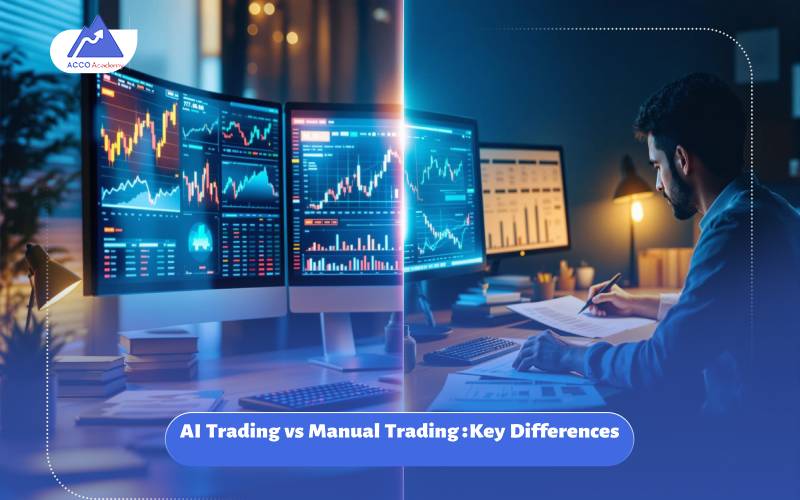
| Aspect | AI Trading | Manual Trading |
| Control | Algorithm-driven, limited human input | Full human control |
| Speed | Milliseconds, automated | Slower, human-dependent |
| Emotion | Emotionless, data-driven | Prone to emotional biases |
| Adaptability | Limited by programming | High, adjusts to unforeseen events |
| Consistency | Highly consistent if optimized | Varies with trader’s state |
These differences shape strategy suitability. In high-frequency trading, AI’s speed is unmatched, executing trades faster than any human. However, during the 2016 U.S. election, manual traders who anticipated market reactions to Trump’s victory outperformed rigid AI systems. Emotional discipline is critical; a manual trader might overtrade during a crypto pump, while AI sticks to its algorithm. Adaptability favors humans in chaotic markets—e.g., manual traders navigated the 2020 oil price crash by interpreting supply chain disruptions, which AI missed. Consistency is AI’s strength; a well-tuned trading bot delivers steady results, unlike a manual trader distracted by fatigue. These trade-offs guide whether AI trading vs manual trading suits specific markets or goals.
Use Cases for AI Trading
AI trading excels in:
- High-Frequency Trading (HFT): Executes rapid trades to exploit micro-price gaps.
- Arbitrage: Capitalizes on price differences across exchanges.
- Trend Following: Uses indicators to ride market trends.
- Market Making: Provides liquidity via simultaneous buy/sell orders.
In HFT, firms like Jane Street use AI to trade millions of shares daily, profiting from tiny spreads. Arbitrage in forex AI trading involves exploiting inefficiencies, like buying USD/JPY on one exchange and selling higher elsewhere. Trend-following AI systems identify patterns, such as a 50-day moving average crossover, to enter trades. Market-making bots ensure liquidity in crypto exchanges, earning profits from bid-ask spreads. For example, a bot on Coinbase might place orders for Ethereum, balancing supply and demand while generating consistent returns, showcasing AI’s edge in data-intensive strategies.
Use Cases for Manual Trading
Manual trading suits:
- Swing Trading: Holding positions for days/weeks based on technical patterns.
- Day Trading: Profiting from intraday price movements.
- Event-Driven Trading: Capitalizing on news or earnings.
- Long-Term Investing: Building portfolios based on fundamentals.
Swing traders might use patterns like double bottoms to time entries in stocks like Apple. Day traders thrive in volatile markets, scalping small gains in Tesla’s intraday swings. Event-driven traders profit from catalysts, like NVIDIA’s earnings beats, by anticipating market reactions. Long-term investors analyze fundamentals, such as Microsoft’s cloud growth, to hold positions for years. During the 2023 debt ceiling crisis, manual traders who interpreted political signals outperformed AI systems, highlighting human intuition’s value in event-driven trading.
Which is Right for You? Factors to Consider
Consider:
- Time Commitment: Manual trading demands hours; AI automates tasks.
- Technical Skills: AI requires coding or platform knowledge; manual trading needs market expertise.
- Risk Tolerance: AI faces technical risks; manual trading risks emotional errors.
- Trading Goals: AI suits short-term strategies; manual trading fits long-term goals.
- Capital: AI requires software investment; manual trading is accessible.
A part-time trader with $10,000 might prefer manual trading for simplicity, using free charting tools like TradingView. A hedge fund with $100M can afford AI trading platforms like QuantConnect, leveraging scalability. Risk-averse traders may avoid AI due to potential outages, as seen in a 2023 Robinhood glitch. Goal-oriented traders—e.g., those aiming for quick crypto gains—favor AI, while value investors prefer manual analysis of balance sheets. Capital constraints often dictate choices; manual trading requires only a brokerage account, while AI demands servers and data subscriptions.
Combining AI and Manual Trading
A hybrid approach blends strengths:
- AI Analysis, Manual Execution: AI generates signals; traders decide execution.
- Automating Routine Tasks: AI monitors prices, freeing traders for strategy.
- Manual Oversight: Traders intervene during anomalies.
For instance, a trader using MetaTrader’s AI tools might receive breakout alerts for GBP/USD, then manually execute based on Brexit news. Automating tasks like scanning for RSI divergences allows traders to focus on high-level decisions, such as portfolio allocation. During the 2022 FTX collapse, hybrid traders used AI to monitor crypto prices but manually paused trading to avoid losses, balancing efficiency with caution. This approach suits traders who want AI’s data-crunching power without sacrificing human judgment, especially in unpredictable markets like forex AI trading.
Future Trends in Trading
- Advancements in AI: Machine learning improves predictive accuracy.
- Increased AI Adoption: Retail traders access affordable platforms.
- Evolving Human Role: Traders focus on strategy and oversight.
Quantum computing could process massive datasets, enhancing AI’s ability to predict trends. Platforms like eToro are integrating AI tools, making automated trading accessible to retail traders. Human traders will shift to designing algorithms and monitoring systems, as seen in firms like Bridgewater, which combine AI with human oversight. The rise of decentralized finance (DeFi) platforms, using AI for yield farming, signals broader adoption. By 2030, AI may dominate execution, but humans will remain critical for interpreting rare events, like geopolitical crises, ensuring a symbiotic future for AI trading vs manual trading.
Conclusion
Deciding between AI trading and manual trading hinges on your skills, goals, and resources. AI trading delivers speed, objectivity, and scalability, excelling in high-frequency trading and arbitrage, but faces challenges like complexity and technical risks. Manual trading offers control, flexibility, and human discretion, ideal for event-driven trading or long-term investing, yet it’s time-consuming and prone to emotional biases. A hybrid approach—using AI for analysis and humans for oversight—may balance these strengths, as seen in traders leveraging AI trading platforms like TradeStation with manual tweaks. As trading bots and algorithmic trading evolve, costs will decrease, and adoption will rise, reshaping the industry. Human traders will focus on strategy, complementing AI’s efficiency. Whether choosing AI trading vs manual trading, success demands discipline, research, and risk management. Evaluate your time, capital, and risk tolerance to select the best path, ensuring you thrive in the dynamic world of financial markets.
Frequently Asked Questions
- What level of programming knowledge is required to develop a custom AI trading bot?
- How do you backtest an AI trading strategy effectively to avoid overfitting?
- What are the regulatory considerations for using AI trading platforms in different countries?
- How can traders protect themselves from technical failures or security breaches when using AI trading systems?
- What are some emerging trends in AI trading that traders should be aware of?