
Uncategorized
The foreign exchange (Forex) market, with its daily trading volume exceeding $7 trillion, remains the largest and most liquid financial market globally. As we approach 2025, the Forex landscape continues to evolve, driven by technological advancements, regulatory changes, and shifting market dynamics. For traders, mastering Forex trading strategies 2025 is crucial to navigate this dynamic environment and achieve consistent profitability. Whether you’re a novice exploring the basics or an experienced trader seeking to refine your approach, selecting the right strategy can make all the difference.
This comprehensive guide aims to equip traders with practical, up-to-date Forex trading strategies 2025 tailored to the anticipated market trends. From trend-following to scalping and position trading, we’ll explore a range of strategies, their strengths, weaknesses, and implementation techniques. Additionally, we’ll cover essential topics like risk management, technical tools, and the psychological aspects of trading. By blending theoretical insights with actionable steps, this article serves as a roadmap for traders aiming to thrive in 2025’s Forex market. Let’s dive into the principles, tools, and strategies that will define successful Forex trading strategies 2025 and empower you to make informed, profitable decisions.
Principles of Forex Trading Strategies
1. Defining a Forex Trading Strategy
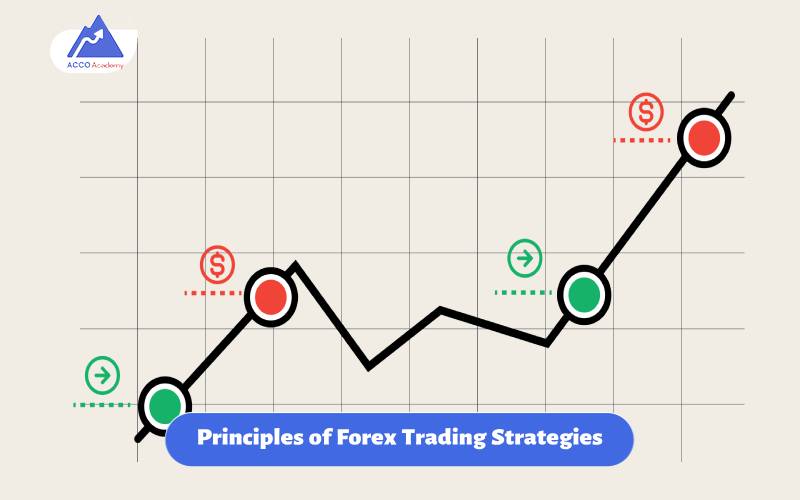
A Forex trading strategy is a structured approach that traders use to make informed decisions about buying or selling currency pairs in the Forex market. It encompasses rules, tools, and techniques designed to maximize profits while minimizing risks. A well-defined strategy outlines entry and exit points, risk management protocols, and the trader’s objectives, ensuring consistency in decision-making.
Forex trading strategies 2025 must adapt to the market’s evolving nature, incorporating modern tools like artificial intelligence and real-time data analysis. A strategy typically includes three core components: market analysis (technical or fundamental), risk management, and trade execution. By adhering to a systematic plan, traders can avoid impulsive decisions driven by emotions, which often lead to losses.
2. Factors Influencing Strategy Selection
Choosing the right Forex trading strategy depends on several factors:
- Risk Tolerance: Conservative traders may prefer low-risk strategies like range trading, while aggressive traders might opt for scalping or breakout strategies.
- Capital: The size of your trading account influences position sizing and leverage, impacting strategy choice.
- Trading Goals: Are you aiming for short-term gains or long-term wealth accumulation? Day trading suits the former, while position trading aligns with the latter.
- Technical Knowledge: Advanced strategies like scalping require proficiency in technical analysis and fast execution.
Understanding these factors ensures traders select strategies aligned with their personal circumstances and market conditions in 2025.
3. Types of Forex Trading Strategies
Forex trading strategies can be broadly categorized based on trading style and time horizon. Below, we outline the main types, each of which will be explored in detail later:
- Trend Following: Capitalizing on sustained market movements.
- Range Trading: Exploiting price oscillations within defined boundaries.
- Breakout Trading: Entering trades when prices break through key levels.
- Scalping: Executing numerous small trades for quick profits.
- Day Trading: Completing all trades within a single trading day.
- Position Trading: Holding trades for weeks or months based on long-term trends.
Each strategy suits different trader profiles and market conditions, making it essential to understand their mechanics and applications.
Top Forex Trading Strategies for 2025
1. Trend Following Strategy
Overview
Trend following is one of the most popular Forex trading strategies 2025, as it leverages sustained price movements in a single direction. This strategy assumes that prices will continue moving in their current direction—up (bullish) or down (bearish)—allowing traders to ride the trend for profits.
Identifying Trends
To implement a trend-following strategy, traders must first identify the market trend using tools like:
- Moving Averages (MAs): Simple Moving Averages (SMA) and Exponential Moving Averages (EMA) help smooth price data to reveal trends. A common approach is using a 50-day and 200-day MA crossover to confirm trend direction.
- Trendlines: Drawn on price charts to connect higher lows (uptrend) or lower highs (downtrend), trendlines visually confirm the market’s direction.
- Channels: Tools like Donchian Channels or Bollinger Bands define the trend’s boundaries, helping traders identify entry and exit points.
Implementation
- Entry: Enter a buy trade when the price is above a rising MA or breaks above a trendline in an uptrend. For sell trades, the opposite applies.
- Exit: Use trailing stops or exit when the trend shows signs of reversal (e.g., MA crossover in the opposite direction).
- Tools: Combine MAs with indicators like the Average Directional Index (ADX) to measure trend strength.
Strengths and Weaknesses
- Strengths: High profitability in strong trends, simplicity, and adaptability across timeframes.
- Weaknesses: Vulnerable to false signals in choppy markets, requires patience during trendless periods.
Example
In 2025, suppose the EUR/USD pair exhibits a strong uptrend driven by favorable Eurozone economic data. A trader using a 50-day EMA and 200-day EMA crossover enters a buy position when the shorter EMA crosses above the longer one, confirming the trend. They exit when the trend weakens, as indicated by a bearish crossover.
2. Range Trading Strategy
Overview
Range trading is ideal for markets lacking a clear trend, where prices oscillate between defined support and resistance levels. This strategy is effective in stable markets and appeals to traders seeking predictable price movements.
Identifying Ranges
Key tools for identifying ranges include:
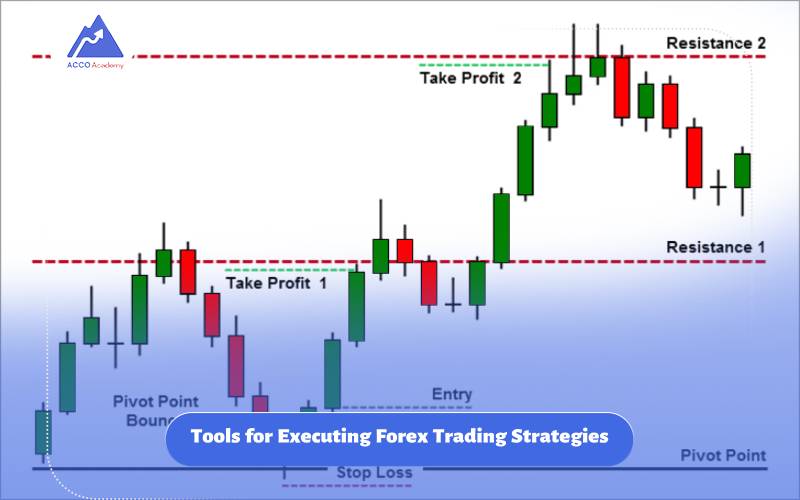
- Support and Resistance: Support is the price level where buying interest prevents further declines, while resistance caps upward movements. These levels are identified using historical price data or pivot points.
- Oscillators: Indicators like the Relative Strength Index (RSI) and Stochastic Oscillator help identify overbought (sell signal) and oversold (buy signal) conditions within a range.
Implementation
- Entry: Buy near support and sell near resistance, confirmed by oscillator signals (e.g., RSI below 30 for buying).
- Exit: Take profits at the opposite range boundary or when oscillators indicate a reversal.
- Tools: Use Bollinger Bands to visualize range boundaries and RSI to time entries.
Strengths and Weaknesses
- Strengths: High success rate in stable markets, clear entry/exit points.
- Weaknesses: Ineffective during trending markets, requires precise timing.
Example
In 2025, the USD/JPY pair fluctuates between 145.00 (support) and 148.00 (resistance). A trader buys at 145.20 when RSI drops below 30 and sells at 147.80 when RSI exceeds 70, capitalizing on the range-bound movement.
3. Breakout Trading Strategy
Overview
Breakout trading involves entering the market when the price breaks through a significant support or resistance level, signaling the start of a new trend. This strategy is popular for capturing large price movements.
Identifying Breakouts
Key tools include:
- Chart Patterns: Patterns like triangles, flags, or head-and-shoulders signal potential breakouts.
- Volume: Increased trading volume during a breakout confirms its validity.
- Price Levels: Monitor key psychological levels (e.g., 1.2000 for EUR/USD) or historical highs/lows.
Implementation
- Entry: Place a buy order above resistance or a sell order below support, with confirmation from volume or a secondary indicator like the Moving Average Convergence Divergence (MACD).
- Exit: Set profit targets based on the breakout’s projected range or use trailing stops.
- Tools: Combine chart patterns with volume indicators and MACD for confirmation.
Strengths and Weaknesses
- Strengths: Captures significant price movements, high reward potential.
- Weaknesses: Prone to false breakouts, requires quick decision-making.
Example
In 2025, the GBP/USD pair forms a symmetrical triangle, with resistance at 1.3500. A trader enters a buy position when the price breaks above 1.3500 with high volume, targeting a 100-pip move based on the pattern’s height.
4. Scalping Strategy
Overview
Scalping is a high-frequency trading strategy that involves making numerous small trades to capture minimal price movements (5–10 pips). It’s suited for traders with fast execution capabilities and a high tolerance for stress.
Execution
- Entry: Use fast-moving indicators like the 1-minute or 5-minute EMA to identify short-term trends.
- Exit: Close trades quickly, often within minutes, to secure small profits.
- Tools: Employ scalping-specific platforms with low latency, such as MetaTrader 5, and indicators like the Parabolic SAR.
Strengths and Weaknesses
- Strengths: High trade frequency, potential for consistent small gains.
- Weaknesses: High transaction costs, requires intense focus and fast execution.
Example
A scalper in 2025 trades the EUR/GBP pair on a 1-minute chart, entering a buy position when the 5-period EMA crosses above the 20-period EMA and exiting after a 7-pip gain, repeating this process multiple times daily.
5. Day Trading Strategy
Overview
Day trading involves opening and closing trades within a single trading day, avoiding overnight exposure. This strategy suits traders who prefer active trading and quick decision-making.
Execution
- Entry: Use technical analysis (e.g., candlestick patterns, Fibonacci retracements) combined with economic news releases to identify opportunities.
- Exit: Close all positions before the market closes to avoid overnight risks.
- Tools: Leverage real-time news feeds and technical indicators like RSI and MACD.
Strengths and Weaknesses
- Strengths: Eliminates overnight risk, leverages intraday volatility.
- Weaknesses: Time-intensive, requires constant market monitoring.
Example
In 2025, a day trader monitors the USD/CAD pair ahead of a U.S. non-farm payroll report. Anticipating volatility, they enter a buy position when a bullish engulfing pattern forms post-release, exiting with a 50-pip profit before the session ends.
6. Position Trading Strategy
Overview
Position trading involves holding trades for weeks or months, based on long-term market trends. It relies heavily on fundamental analysis and suits patient traders with a long-term outlook.
Execution
- Entry: Enter trades based on macroeconomic factors (e.g., interest rate differentials, GDP growth) and long-term technical trends.
- Exit: Exit when fundamental or technical indicators signal a trend reversal.
- Tools: Use fundamental analysis tools (e.g., economic calendars) and long-term charts (weekly, monthly).
Strengths and Weaknesses
- Strengths: Lower time commitment, potential for large profits in strong trends.
- Weaknesses: Exposure to long-term risks, requires significant capital to withstand volatility.
Example
In 2025, a position trader buys the AUD/USD pair, anticipating a strengthening Australian dollar due to rising commodity prices. They hold the position for three months, exiting when fundamental data shifts.
Risk Management in Forex Trading Strategies

1. Importance of Risk Management
Effective risk management is the cornerstone of successful Forex trading strategies 2025. Without it, even the best strategies can lead to significant losses. Risk management protects capital, ensures longevity in trading, and mitigates the impact of market volatility.
2. Risk Management Techniques
Key techniques include:
- Stop Loss: Set a predetermined exit point to limit losses. For example, place a stop loss 20 pips below the entry price for a buy trade.
- Take Profit: Lock in profits at a predefined level to avoid reversals.
- Position Sizing: Adjust trade size based on account balance and risk tolerance, typically risking 1–2% of capital per trade.
3. Risk-Reward Ratio
The risk-reward ratio compares potential losses to potential gains. A ratio of 1:2 means risking $1 to gain $2. A favorable ratio (e.g., 1:3) enhances profitability and is a critical factor in strategy selection.
Example
A trader risks 50 pips to gain 150 pips, maintaining a 1:3 risk-reward ratio. This ensures that winning trades outweigh losses over time.
Tools for Executing Forex Trading Strategies
1. Trading Platforms
Popular platforms for Forex trading strategies 2025 include:
- MetaTrader 4/5 (MT4/MT5): Offers advanced charting, automated trading, and customizable indicators.
- TradingView: Known for its user-friendly interface and community-driven analysis.
- cTrader: Ideal for scalping due to its fast execution and low latency.
2. Indicators and Oscillators
Key indicators include:
- Moving Averages: Identify trends and reversals.
- RSI and Stochastic: Detect overbought/oversold conditions.
- MACD: Confirm trend direction and momentum.
3. Technical Analysis Tools
Tools like Fibonacci retracements, candlestick patterns, and chart patterns (e.g., head-and-shoulders) help traders analyze price action and predict movements.
Key Tips for Success in Forex Trading

1. Continuous Learning
Staying updated with Forex market trends 2025 through webinars, books, and online courses is essential for adapting to new market conditions.
2. Practice and Experience
Use demo accounts to test Forex trading strategies 2025 without risking real capital. Platforms like MT4 offer robust demo environments.
3. Trading Psychology
Control emotions like greed and fear. Stick to your strategy and avoid overtrading, especially after losses.
The Future of Forex Trading Strategies in 2025

1. Impact of New Technologies
Technologies like artificial intelligence (AI) and machine learning are transforming Forex trading strategies 2025. AI-powered trading bots analyze vast datasets to predict price movements, while blockchain ensures transparent transactions.
2. Regulatory Changes
New regulations in 2025, such as stricter leverage limits in major markets, may impact trading strategies, requiring traders to adapt.
3. Emerging Market Trends
Shifts in investor behavior, such as increased focus on digital currencies or ESG (Environmental, Social, Governance) factors, will shape Forex market trends 2025.
Conclusion
As the Forex market continues to evolve, mastering Forex trading strategies 2025 is essential for traders aiming to succeed in this dynamic environment. This guide has explored a range of strategies—trend following, range trading, breakout, scalping, day trading, and position trading—each tailored to different trader profiles and market conditions. By understanding their mechanics, strengths, and weaknesses, traders can select strategies that align with their goals, risk tolerance, and expertise.
Risk management remains a critical component, ensuring capital preservation and long-term profitability. Tools like stop-loss orders, proper position sizing, and favorable risk-reward ratios are non-negotiable. Additionally, leveraging modern platforms, indicators, and emerging technologies like AI will give traders a competitive edge in 2025. Continuous learning, practice through demo accounts, and emotional discipline are equally vital for success.
As you navigate the Forex trading strategies 2025, prioritize adaptability and informed decision-making. By combining robust strategies with sound risk management and a commitment to growth, you can capitalize on the opportunities the Forex market offers. Stay proactive, stay informed, and let these strategies guide you toward consistent profitability in 2025 and beyond.
FAQs
- What is the best Forex trading strategy for beginners?
Beginners should start with range trading or trend following, as they are straightforward and rely on clear technical signals. - How can I reduce risk in Forex trading?
Use stop-loss orders, maintain a favorable risk-reward ratio (e.g., 1:2 or higher), and risk only 1–2% of your capital per trade. - Are automated Forex trading systems recommended?
Automated systems can be effective but require thorough testing and monitoring to ensure reliability and alignment with market conditions. - How can I optimize my Forex trading strategy?
Backtest strategies on historical data, practice in demo accounts, and adjust based on performance metrics and market changes. - What resources are available for learning Forex strategies?
Explore online courses, books like “Currency Trading for Dummies,” and platforms like Babypips.com for comprehensive learning materials.